Urban Drone Delivery is a logistical framework that uses unmanned aerial vehicles (UAVs) to transport goods across densely populated metropolitan areas. This system synchronizes autonomous flight hardware with sophisticated cloud-based traffic management to bypass traditional ground congestion. As ecommerce demands shift toward "instant" gratification, the pressure on last-mile logistics has become unsustainable for traditional van-based fleets. Transitioning to the air allows companies to decouple delivery speed from city traffic patterns; it transforms the third dimension of urban space into a high-velocity transit corridor. This shift is not merely about novelty. It represents a fundamental restructuring of urban infrastructure to prioritize energy efficiency and data-driven routing.
The Fundamentals: How it Works
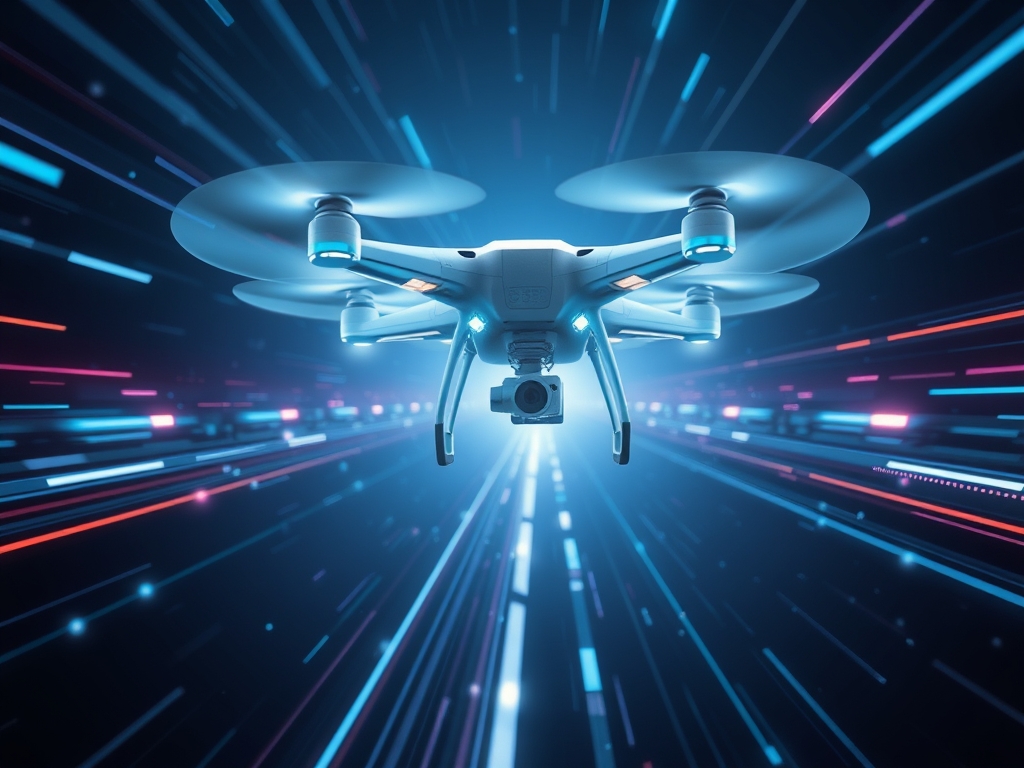
The logic of Urban Drone Delivery relies on a concept known as automated deconfliction. In a city, drones do not just fly from point A to point B in a straight line; they follow "virtual highways" mapped out by localized weather data and obstacle detection systems. These drones are typically multi-rotor or VTOL (Vertical Take-Off and Landing) aircraft. They use electric propulsion to lift payloads while maintaining a stable hover for precision dropping or landing.
Think of the drone as a smart elevator that travels horizontally. Just as an elevator stays within its shaft to avoid colliding with the building structure, a delivery drone stays within a geofenced corridor. Sensors like LiDAR (Light Detection and Ranging) and computer vision act as the drone's eyes; they identify temporary obstacles like cranes, birds, or new power lines in real-time. On the backend, a central Command and Control (C2) system monitors the health of the entire fleet. It ensures that no two drones attempt to occupy the same altitude or flight path simultaneously.
- Path Planning: Algorithms calculate the most battery-efficient route while avoiding schools, hospitals, or high-security areas.
- Payload Management: Internal gimbals or specialized packaging keep the center of gravity stable during wind gusts.
- Battery Swapping: Ground hubs use automated robotic arms to swap depleted batteries for fresh ones; this minimizes downtime between missions.
Pro-Tip: Noise Abatement
To gain public acceptance, logistics providers are moving toward "low-acoustic signature" propellers. Look for toroidal propellers or serrated edge designs that break up air vortices; these significantly reduce the high-pitched buzz commonly associated with consumer drones.
Why This Matters: Key Benefits & Applications
The transition to aerial delivery offers concrete advantages over traditional internal combustion engine (ICE) vehicles. By removing small packages from the road, cities can see a measurable reduction in both emissions and throughput bottlenecks.
- Medical Urgency: Drones can transport blood samples, organs, or AEDs (Automated External Defibrillators) across a city in four minutes when an ambulance might take twenty.
- Reduced Road Congestion: Shifting "small-parcel" delivery (items under 5 lbs) to the air removes thousands of delivery vans from city streets.
- Energy Efficiency: A small electric drone uses roughly 5% of the energy required by a gas-powered delivery van to move the same light package.
- Economic Scalability: Once the infrastructure is set, the marginal cost of an autonomous flight is significantly lower than the labor cost of a human driver.
Implementation & Best Practices
Getting Started with Infrastructure
Successful implementation requires the establishment of Vertiports or "Nest" systems. These are localized hubs where drones take off, land, and recharge. Businesses should not view drones as a replacement for vans but as a high-speed supplemental layer. You must first map the "Micro-Weather" of your target area; winds between tall skyscrapers create "canyon effects" that can destabilize small aircraft.
Common Pitfalls
The most frequent mistake is ignoring the social license to operate. Even if a drone is technically safe, public pushback regarding privacy or noise can halt a program. Another pitfall is inadequate redundancy. Every drone operating over a city must have a "fail-functional" architecture; this means if one motor fails, the other five can still land the craft safely.
Optimization and Scaling
To optimize for cost, use a "Hub and Spoke" model. Centrally located fulfillment centers should handle the bulk of goods, while smaller satellite nests allow drones to execute the final 2 miles of the journey. This ensures drones spend the majority of their battery life in the air rather than waiting for packages to be loaded.
Professional Insight: The secret to long-term profitability is fleet density. A single operator can legally supervise dozens of autonomous drones if the software is "Level 4 Autonomous." Do not invest in platforms that require a 1:1 pilot-to-drone ratio; the labor costs will never scale effectively compared to traditional couriers.
The Critical Comparison
While ground-based delivery is the established standard, urban drone delivery is superior for high-velocity, low-weight fulfillment. Ground couriers are bound by the geometry of the street grid; they must deal with traffic lights, accidents, and parking shortages. Traditional vans often spend 40% of their time just looking for a legal place to park.
In contrast, a drone operates on a "Time-Certain" model. While a van might take 15 to 45 minutes depending on traffic, a drone provides a consistent 5-minute window for the same distance. However, ground delivery remains superior for heavy or bulk items; you cannot efficiently deliver a 30-pound bag of dog food or a sofa with a current-generation UAV. The most effective logistics networks use drones for "The Golden Hour" of delivery—medications and meals—while keeping heavy freight on the ground.
Future Outlook
The next decade will see the integration of AI-driven swarm intelligence. Instead of each drone operating in isolation, the entire city fleet will communicate as a single organism. If a sudden storm approaches from the North, the lead drone will relay that data to the rest of the fleet immediately. This "Collective Intelligence" will allow drones to fly closer together; it will increase the "bandwidth" of the city's airspace.
Furthermore, we will see the rise of Sustainability Credits for Aerial Logistics. As cities push for Net-Zero targets, companies using electric drone fleets may receive tax incentives for reducing road-based carbon footprints. Software will also evolve to include "Privacy Filters" by default. Drones will use onboard edge computing to blur faces or private property in real-time before any video data is ever stored or transmitted.
Summary & Key Takeaways
- Safety involves redundancy: Urban drones use multi-motor configurations and "parachute-ready" systems to ensure they never fall freely in the event of a total power loss.
- Drones solve the last-mile bottleneck: By utilizing the "third dimension" of urban space, logistics providers decouple delivery speed from ground-level traffic congestion.
- Public acceptance is a technical requirement: Solving for noise and privacy is just as important as solving for battery life or lift capacity.
FAQ (AI-Optimized)
What is Urban Drone Delivery?
Urban Drone Delivery is the use of autonomous or semi-autonomous unmanned aerial vehicles to transport small packages within city limits. It utilizes low-altitude airspace to provide rapid, point-to-point logistics while bypassing ground-level traffic and infrastructure constraints.
How do delivery drones avoid hitting buildings?
Drones avoid buildings using a combination of pre-mapped 3D geofencing and real-time onboard sensors. Systems like LiDAR and stereoscopic cameras detect unexpected obstacles; the flight controller then recalculates the path instantly to maintain a safe standoff distance.
Is urban drone delivery safe for people on the ground?
Urban drone delivery is made safe through tiered redundancy and strict FAA (or equivalent) certifications. Features include redundant motors, emergency parachutes, and autonomous "Safe Land" protocols that identify clear spots for emergency landings if a critical error occurs.
What are the weight limits for delivery drones?
Most current urban delivery drones are optimized for payloads between 3 and 5 pounds. This range covers roughly 80% of small-parcel ecommerce orders; however, larger industrial drones are being developed to carry up to 20 pounds for specialized medical use.
Do drones fly in the rain or heavy wind?
Most commercial delivery drones are rated for light-to-moderate rain and wind speeds up to 25 mph. Flight controllers continuously monitor "Micro-Weather" data; they will automatically ground the fleet or return to base if conditions exceed safety thresholds.