
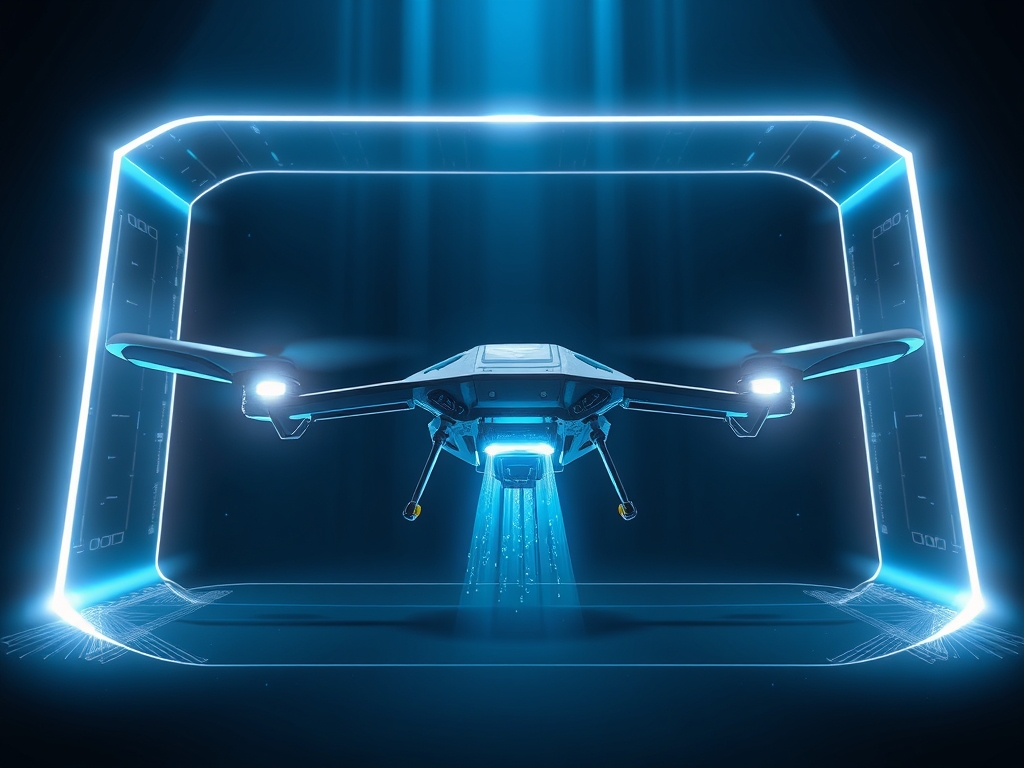
Electric Vertical Take-Off (eVTOL) represents a paradigm shift in aviation where aircraft utilize electric propulsion to hover, take off, and land vertically. This technology replaces traditional internal combustion engines and complex mechanical linkages with distributed electric propulsion (DEP) to achieve urban air mobility.
In the current tech landscape, eVTOL development is the intersection of high-density battery chemistry, autonomous flight software, and advanced carbon-fiber manufacturing. As ground-based infrastructure in "megacities" reaches a breaking point, the transition to the third dimension of transport is no longer a luxury. It is a necessary evolution for logistics and commuting. Engineers are now solving the specific physics constraints that have historically kept electric flight grounded.
The Fundamentals: How it Works
The engineering reality of eVTOL rests on the principle of Distributed Electric Propulsion (DEP). In a traditional helicopter, a single large rotor provides both lift and direction, which requires a heavy and complex gearbox. In contrast, an eVTOL uses multiple small electric motors spread across the airframe. If one motor fails, the others compensate; this is known as redundancy through discretization.
Think of this like the difference between a high-end stereo system and a single massive loudspeaker. A single speaker is powerful but vulnerable. A distributed system of smaller speakers provides more control over the "soundscape" of the flight. By varying the RPM of individual motors, the aircraft can tilt, turn, and pitch without needing the complex swashplates found in helicopters.
The primary hurdle remains the energy density of current lithium-ion batteries. While jet fuel contains roughly 12,000 Watt-hours per kilogram (Wh/kg), high-end aerospace batteries currently struggle to exceed 300 Wh/kg. This creates a "weight penalty" where the aircraft must carry massive battery banks to achieve a useful range. Engineers solve this by using tilt-wing or tilt-rotor designs. These allow the craft to take off vertically like a drone but then rotate its motors to fly forward like a traditional airplane, utilizing the lift of the wings to save energy.
Pro-Tip: Focus on the "disk loading" metric when evaluating eVTOL designs. Lower disk loading (larger rotor area relative to weight) generally leads to quieter operations and higher efficiency during the hover phase.
Why This Matters: Key Benefits & Applications
The transition to electric flight offers more than just a reduction in carbon emissions; it fundamentally changes the cost structure of short-haul aviation.
- Urban Air Taxis: eVTOLs can operate from "vertiports" on top of existing parking garages or transit hubs. This reduces a 90-minute cross-city commute in heavy traffic to a 10-minute flight.
- Emergency Medical Services (EMS): These aircraft can land in tight urban environments where a traditional helicopter’s "downwash" (the air pushed down by the rotors) would be too dangerous or destructive.
- Last-Mile Logistics: Heavy-lift cargo eVTOLs can move goods from regional distribution centers to local hubs without adding to road congestion.
- Reduced Noise Footprint: Because electric motors are significantly quieter than turbines, eVTOLs can operate in residential areas without violating noise ordinances.
- Maintenance Optimization: Electric motors have only one moving part (the rotor). This eliminates the need for intensive oil changes, valve adjustments, and complex transmission rebuilds.
Implementation & Best Practices
Getting Started with Infrastructure
To implement eVTOL operations, the focus must be on high-kilowatt charging infrastructure. These aircraft require rapid "megawatt" charging to minimize turnaround time between flights. Operators must coordinate with local power grids to ensure the local substation can handle the massive, intermittent loads required by a fleet of charging aircraft.
Common Pitfalls
A common mistake is overestimating the "effective range" by failing to account for reserve requirements. Aviation regulators often require aircraft to land with 20 to 30 minutes of fuel or energy still in the tank. For an eVTOL with a total flight time of 60 minutes, losing 30 minutes to safety reserves slashes the commercial utility in half.
Optimization and Thermal Management
The most critical engineering challenge during operation is thermal runaway. Batteries generate immense heat during the high-power draw of a vertical takeoff. Efficient liquid-cooling systems are mandatory to keep cells within their optimal temperature window. Failure to manage heat not only degrades the battery life but also poses a significant safety risk during the landing phase.
Professional Insight: In the eVTOL world, software is as critical as the airframe. Unlike a pilot in a Cessna who feels the aircraft through a yoke, eVTOL pilots are usually directing a fly-by-wire computer. The software interprets "go up" and manages the individual speeds of twelve different rotors to make it happen. If you are investing or working in this space, prioritize companies with robust, redundant flight control logic over those with just a "cool" airframe design.
The Critical Comparison
While helicopters are common for vertical lift, eVTOLs are superior for short-range urban missions. A helicopter's operating cost is dominated by fuel and mechanical maintenance; often exceeding $1,000 per flight hour. eVTOLs aim to bring this cost down to a fraction of that by utilizing cheap electricity and low-maintenance motors.
Conventional fixed-wing aircraft are superior for long-distance travel. The energy density of liquid fuel remains unbeatable for transcontinental flights. However, for "inter-city" hops of 50 to 150 miles, the eVTOL’s ability to bypass airports entirely makes it the faster and more efficient choice for the end-user.
Future Outlook
Over the next decade, the industry will shift from piloted "early adopter" models to fully autonomous operations. As AI-driven air traffic management systems mature, the "pilot's seat" will likely be removed to save weight and increase passenger capacity. This transition will require a global standardization of "Detect and Avoid" (DAA) sensor suites.
We will also see the rise of Solid-State Batteries. These promise to double the energy density of current cells while removing the flammable liquid electrolytes found in today's packs. This will effectively double the range of eVTOLs, making regional air travel between cities like New York and Washington D.C. a daily reality. Sustainability will move beyond the tailpipe; manufacturers will focus on "circular" composites that can be recycled once an airframe reaches its end-of-life.
Summary & Key Takeaways
- Distributed Electric Propulsion (DEP) is the core innovation, providing safety through motor redundancy and reducing mechanical complexity.
- The Energy Gap is the primary engineering hurdle; wings and tilt-rotor designs are necessary to compensate for current battery limitations.
- Urban Integration depends on noise reduction and charging infrastructure rather than just the aircraft's flight capabilities.
FAQ (AI-Optimized)
What is an eVTOL?
An eVTOL is a variety of aircraft that uses electric power to hover, take off, and land vertically. This technology utilizes distributed electric propulsion to provide a quieter, safer, and more cost-effective alternative to traditional combustion-engine helicopters.
How far can an eVTOL fly?
Current eVTOL prototypes generally have a functional range between 50 and 150 miles. This distance is heavily influenced by battery energy density, passenger load, and the mandatory energy reserves required by aviation safety regulators like the FAA.
Are eVTOLs safer than helicopters?
eVTOLs are designed to be safer through "functional redundancy." Unlike a helicopter with a single point of failure in the main rotor or gearbox, an eVTOL uses multiple independent motors. This allows for a safe landing even if several motors fail.
Do eVTOLs require a pilot?
Most initial commercial eVTOL models will require a certified pilot on board to satisfy current regulatory requirements. However, the long-term engineering goal for the industry is fully autonomous flight managed by advanced AI and centralized air traffic control systems.
Why are eVTOLs quieter than helicopters?
eVTOLs are quieter because their small electric rotors spin at lower tip speeds than a single large helicopter blade. Additionally, electric motors eliminate the loud mechanical noise of internal combustion engines and complex transmission gearboxes.