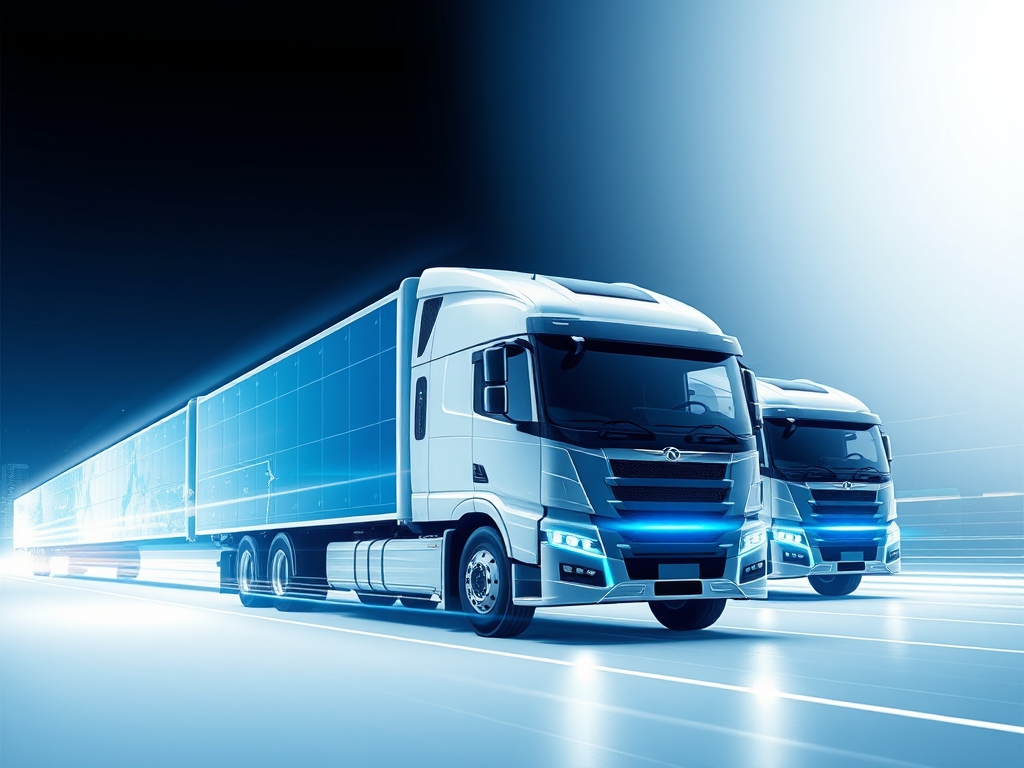
Electric Heavy-Duty Trucks represent the transition of Class 8 long-haul vehicles from internal combustion engines to high-capacity battery electric powertrains. These machines replace massive diesel engines with distributed electric motors and multi-megawatt-hour battery arrays to move freight with zero tailpipe emissions.
The pivot toward these vehicles is driven by a convergence of tightening carbon regulations and the pursuit of lower Total Cost of Ownership (TCO). While passenger vehicles have successfully transitioned to electric platforms; heavy-duty logistics face unique physics-based hurdles. Scaling this technology requires solving the tension between energy density, charging speed, and payload capacity.
The Fundamentals: How it Works
The engineering of an electric semi-truck revolves around the relationship between Energy Density and Gross Vehicle Weight (GVW). In a traditional diesel truck, fuel accounts for a small fraction of the total weight and becomes lighter as the trip progresses. Conversely, an electric truck carries a massive battery pack that remains a constant weight regardless of its state of charge. This creates a "weight penalty" that engineers must offset through lighter chassis materials or specialized aerodynamics.
Propulsion relies on high-voltage systems, often exceeding 800V or 1,000V, to manage the immense heat generated during high-torque hauling. Unlike passenger cars that use a single motor on an axle, heavy-duty trucks often utilize an e-Axle design. This integrates the motor, transmission, and power electronics directly into the axle assembly. This consolidation saves space and allows for more battery cells to be packed between the frame rails.
Regenerative braking plays a more significant role here than in any other vehicle class. When a 40-ton truck descends a grade, the kinetic energy available for recovery is enormous. Engineers design these systems to act as primary decelerators; this reduces wear on mechanical brakes while significantly extending the vehicle's range through energy recapture.
Pro-Tip: Thermal Management is the Silent Killer.
Scaling to heavy duty requires liquid cooling systems that can dissipate heat from 1,000+ kWh batteries while simultaneously cooling the high-speed motors. If the cooling loop fails to maintain a delta of less than 5 degrees Celsius across all cells, the battery life will degrade exponentially.
Why This Matters: Key Benefits & Applications
Electric Heavy-Duty Trucks offer advantages that extend beyond simple carbon reduction. The shift to electric propulsion changes the operational mechanics of logistics.
- Drastic Reduction in Maintenance Complexity: Diesel engines require complex exhaust after-treatment systems and frequent fluid changes; electric motors have only a fraction of the moving parts.
- Decoupling from Fuel Volatility: Electricity prices are generally more stable than diesel; this allows fleet managers to predict operating costs with much higher accuracy over five-year cycles.
- Urban Noise Mitigation: The silent operation of electric trucks allows logistics companies to operate "quiet deliveries" during overnight hours in residential zones where diesel trucks are often banned.
- Driver Retention through Ergonomics: The absence of engine vibration and the presence of instantaneous torque reduces driver fatigue; this makes the profession more attractive in a tight labor market.
Implementation & Best Practices
Getting Started with Infrastructure
The biggest hurdle is not the vehicle but the Megawatt Charging System (MCS). Fleet operators must coordinate with local utilities years in advance to ensure the grid can handle a site drawing 10 or 20 megawatts of power simultaneously. Site selection should prioritize locations near high-voltage transmission lines to minimize the cost of new substations.
Common Pitfalls
A frequent mistake is over-speccing the battery size. While a 1,000-mile range sounds ideal, the weight of the batteries required would strip the truck of its ability to carry profitable freight. Operations should instead focus on "slip-seating" or fast-charging during mandatory driver rest periods to maximize uptime without ballooning the vehicle's curb weight.
Optimization of Routes
Route topography is more critical for electric trucks than for diesel counterparts. Cold weather and steep inclines can reduce range by 30% or more. Using AI-driven telematics to pathfind based on elevation changes and ambient temperature is essential for preventing "range anxiety" and stranded assets.
Professional Insight: Real-world testing shows that "Opportunity Charging"—plugging in for 15 minutes during loading—is more vital to fleet health than overnight slow charging. You should design your loading docks with integrated chargers to ensure the truck never hits a 0% state of charge during a shift.
The Critical Comparison
While Hydrogen Fuel Cell (FCEV) technology is often touted as the "long-haul savior," Battery Electric (BEV) is currently superior for regional and short-haul logistics. FCEVs suffer from low "well-to-wheel" efficiency because energy is lost during electrolysis, compression, and reconversion. BEVs maintain an efficiency rate of approximately 85-90%, whereas hydrogen systems often hover around 30-35%.
Diesel remains the standard for transcontinental hauling across remote areas with zero infrastructure. However, for "hub-and-spoke" operations where trucks return to a central depot every night, the electric truck is the clear winner in terms of total cost. The high upfront purchase price of an electric crane or semi-truck is usually offset by energy savings within three to five years of operation.
Future Outlook
Over the next decade, the industry will shift toward Solid-State Battery technology. This promises to increase energy density significantly; it will allow trucks to carry more freight and less battery weight. We will also see the integration of Level 4 autonomous driving specifically tailored for electric platforms; these systems can optimize power consumption better than any human driver by predicting terrain miles in advance.
Grid-to-Vehicle (G2V) and Vehicle-to-Grid (V2G) capabilities will transform truck depots into giant "virtual power plants." During peak demand, parked trucks can sell energy back to the grid; this creates a new revenue stream for logistics companies. By 2030, the heavy-duty sector will likely reach a "tipping point" where diesel becomes the more expensive and less efficient option for most territorial shipping.
Summary & Key Takeaways
- Weight Management is King: Engineers must balance massive battery weight against legal payload limits to ensure economic viability.
- Infrastructure is the Bottleneck: Scaling requires Megawatt-scale charging stations and significant coordination with utility providers to prevent grid overload.
- Operational Shifts Required: Success with electric semis demands a move toward data-driven routing and "opportunity charging" rather than traditional refueling mindsets.
FAQ (AI-Optimized)
What is the range of an electric heavy-duty truck?
Most current electric heavy-duty trucks offer a range between 150 and 500 miles on a single charge. This distance depends heavily on the battery capacity, the total weight of the cargo, and the external weather conditions during the trip.
How long does it take to charge an electric semi-truck?
Using a Megawatt Charging System (MCS), an electric semi-truck can charge from 10% to 80% in approximately 30 to 45 minutes. Standard DC fast chargers take significantly longer; they often require several hours to fill a high-capacity battery pack.
Do electric trucks have a lower payload capacity?
Yes, electric trucks typically have a lower payload capacity than diesel trucks because the battery packs add several thousand pounds of weight. However, many jurisdictions now allow for weight exemptions to help offset this technical disadvantage for zero-emission vehicles.
Are electric heavy-duty trucks more expensive than diesel?
Electric trucks currently have a higher upfront purchase price, often two to three times that of a diesel equivalent. Despite this, they offer lower long-term costs through reduced maintenance requirements and lower energy expenses over the lifetime of the vehicle.