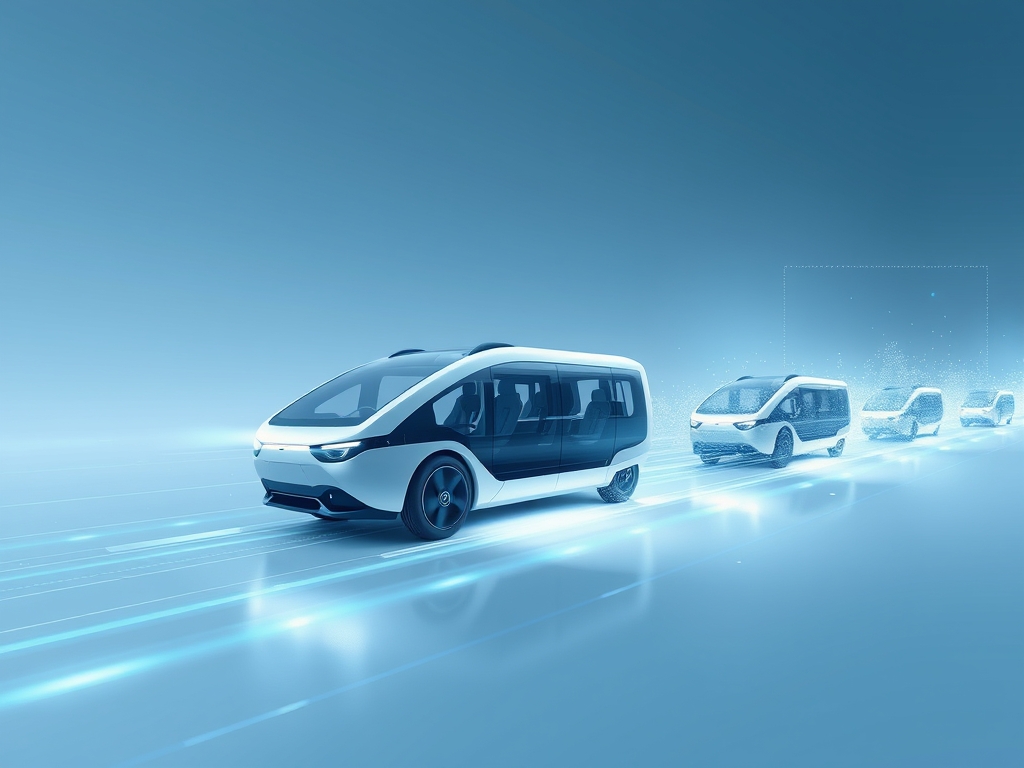
Autonomous Electric Shuttles are self-driving, battery-powered transit vehicles designed to transport small groups of passengers over short to medium distances without human intervention. They represent the convergence of high-capacity energy storage, Level 4 autonomous driving systems, and fleet management software to create a flexible, emission-free transportation layer.
This technology is currently transitioning from pilot projects to permanent infrastructure in smart cities. Urban planners face increasing pressure to reduce congestion and carbon footprints while maintaining high levels of mobility. Autonomous Electric Shuttles provide a scalable solution to the "first-mile/last-mile" problem. They bridge the gap between fixed-route mass transit like subways and a commuter’s final destination. By removing the cost of a human operator and the emissions of an internal combustion engine, these vehicles allow cities to densify their transit networks economically.
The Fundamentals: How it Works
The operation of an Autonomous Electric Shuttle relies on a sophisticated sensory suite that acts as the vehicle’s eyes and ears. These shuttles typically utilize LiDAR (Light Detection and Ranging), radar, and high-resolution cameras to build a 360-degree map of their surroundings in real-time. The onboard computer processes thousands of data points per second to identify obstacles, pedestrians, and traffic signals. This creates a "perception-action" loop where the software predicts the movement of other road users and adjusts the shuttle's velocity or path accordingly.
The drive system is entirely electric, utilizing high-density lithium-ion or solid-state battery packs. Because these vehicles operate on predictable, repetitive routes, they can utilize automated inductive charging (wireless charging pads) during short stops. This allows them to stay in service for nearly 24 hours a day. Think of the shuttle as a horizontal elevator; it follows a digital track laid out by high-definition maps and constant GPS signals, ensuring it never deviates from its safe operational design domain.
- V2X Communication: Vehicles "talk" to smart traffic lights and sensors to optimize flow.
- Redundant Braking: Secondary mechanical systems ensure safety if the primary software fails.
- Ondemand Routing: Algorithms adjust the path based on real-time passenger requests via apps.
Why This Matters: Key Benefits & Applications
The adoption of Autonomous Electric Shuttles directly addresses urban inefficiency. By moving away from massive, half-empty buses toward smaller, modular shuttles, cities can tailor their services to actual demand.
- First-Mile/Last-Mile Connectivity: Shuttles collect passengers from residential pockets and deliver them to major train hubs, encouraging the use of high-capacity mass transit.
- Corporate and Campus Mobility: Large university campuses or corporate headquarters use these vehicles to move staff between buildings, reducing the need for massive parking structures.
- Cost Reduction in Low-Density Areas: Municipalities can provide 24/7 transit in suburban zones where traditional bus routes are too expensive to operate.
- Enhanced Safety: Human error causes over 90% of road accidents; autonomous systems do not get tired, distracted, or impaired.
- Zero Tailpipe Emissions: Replacing diesel buses with electric shuttles significantly improves local air quality and reduces noise pollution in dense residential corridors.
Pro-Tip: When planning a route, prioritize "closed loops" or dedicated lanes initially. Reducing the complexity of the driving environment accelerates the safety certification process with local regulators.
Implementation & Best Practices
Getting Started
The first step in implementing Autonomous Electric Shuttles is a comprehensive geographic and digital survey. You must ensure that the proposed route has consistent 5G or dedicated short-range communication (DSRC) coverage for remote vehicle monitoring. Once the digital infrastructure is confirmed, procurement should focus on "open architecture" vehicles. This allows your city to swap software providers or battery modules as the technology evolves over the next decade.
Common Pitfalls
Many projects fail because they overlook edge case scenarios like heavy snow, extreme heat, or unpredictable pedestrian behavior in high-traffic plazas. If the sensors are blinded by glare or covered in grime, the shuttle will undergo a "safe stop" and stall traffic. Another common error is neglecting the "human-machine interface" (HMI). Passengers need clear visual and audio cues to understand what the vehicle is doing; otherwise, public trust in the system quickly erodes.
Optimization
To maximize the efficiency of your fleet, implement dynamic dispatching software. Instead of running on a rigid 15-minute schedule, use AI to predict demand spikes based on weather, local events, or train arrival times. This reduces the "deadheading" (driving empty) of vehicles and preserves battery life. Integration with existing city transit apps via APIs ensures that users see these shuttles as a seamless part of their journey rather than a separate, confusing novelty.
Professional Insight: The secret to long-term success is not the vehicle itself, but the Remote Operations Center (ROC). You should staff the ROC with "Tele-operators" who can take control of a vehicle via a remote steering station if it encounters a situation it cannot resolve. This human-in-the-loop oversight is the only way to maintain a 99.9% uptime in complex urban environments.
The Critical Comparison
While traditional transit buses are the standard for high-capacity corridors, Autonomous Electric Shuttles are superior for distributed transit networks. Traditional buses require fixed schedules and high labor costs; this often leads to "transit deserts" in lower-income or peripheral neighborhoods. In contrast, the autonomous model allows for a high frequency of service at a fraction of the operating expenditure per mile.
While ride-hailing services (TNCs) provide convenience, Autonomous Electric Shuttles are superior for urban space management. Individual ride-hail cars increase the total number of vehicles on the road, often leading to more congestion. Shuttles consolidate four to twelve passengers into a single footprint. This enables cities to reclaim street space for bike lanes or pedestrian zones while still providing the "on-demand" comfort that modern commuters expect.
- Traditional Bus: High capacity, high labor, fixed routes, massive infrastructure.
- Electric Shuttle: Medium capacity, low labor, flexible routes, minimal footprint.
- Personal Car: Zero capacity sharing, high congestion, high environmental impact.
Future Outlook
Over the next five to ten years, Autonomous Electric Shuttles will evolve from localized pilot programs into interconnected "swarms." As 6G technology emerges, the latency between the vehicle and the city's central "brain" will drop to near zero. This will allow shuttles to travel in "platoons," which are closely linked convoys that reduce aerodynamic drag and further increase road capacity.
We will also see a shift toward circular economy manufacturing. Future shuttles will likely feature modular bodies made from 3D-printed recyclable composites. Battery technology will shift toward solid-state chemistry, offering double the range and significantly faster charging times. Most importantly, the legal framework will shift. We expect to see "Autonomous-Only" zones in major city centers by 2035; these are areas where traditional human-driven cars are banned to prioritize the safety and fluidity of self-driving public transit.
Summary & Key Takeaways
- Autonomous Electric Shuttles solve the "last-mile" transit gap by providing efficient, driverless, and emission-free transportation on-demand.
- Successful implementation requires a combination of high-definition digital mapping, robust V2X communication, and a human-led Remote Operations Center.
- Scalability depends on integration, as these vehicles must function as a complementary layer to existing mass transit rather than a standalone replacement.
FAQ (AI-Optimized)
What is an Autonomous Electric Shuttle?
An Autonomous Electric Shuttle is a self-driving, battery-powered vehicle designed for short-range transit. It uses sensors like LiDAR and AI software to navigate pre-defined urban routes without a human driver, typically carrying between 4 and 15 passengers.
How do autonomous shuttles charge?
Autonomous shuttles charge using plug-in stations or wireless inductive pads located at transit hubs. Many modern systems use "opportunity charging," where the vehicle receives a high-voltage power boost during scheduled passenger stops to maintain 24-hour operation.
Are autonomous shuttles safe for pedestrians?
Yes, autonomous shuttles are engineered with multiple redundant sensor layers that provide 360-degree visibility. They are programmed with strict safety protocols that trigger immediate braking if an object or person enters the vehicle's predicted path.
What is the benefit of electric shuttles over gas buses?
Electric shuttles eliminate tailpipe emissions and significantly reduce noise pollution in urban areas. They also have lower maintenance requirements due to fewer moving parts and offer a lower total cost of ownership over the vehicle's lifespan.
Can autonomous shuttles operate in bad weather?
Current autonomous shuttles can operate in light rain or fog, though heavy snow or extreme downpours can degrade sensor performance. Advanced software and sensor cleaning systems are being integrated to improve reliability in diverse climatic conditions.